The four forces
⏱ 12 min
Every aeroplane in flight is acted on by four forces:
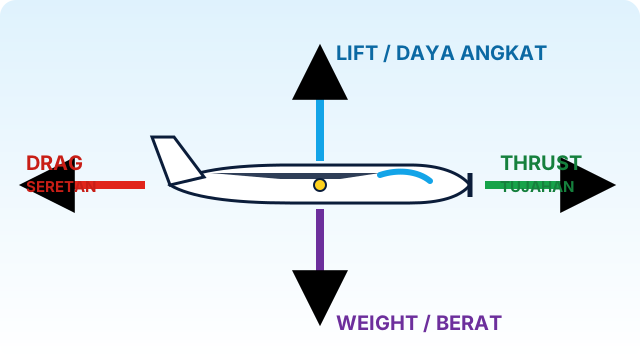
- Lift — produced mainly by the wings, acts upwards (at right angles to the airflow).
- Weight — the pull of gravity on the aircraft, its fuel, crew and load; acts downwards through the centre of gravity.
- Thrust — produced by the propeller or jet engine, pulls or pushes the aircraft forward.
- Drag — air resistance that acts backwards, against the direction of motion.
In straight and level flight at constant speed the forces are in balance: lift equals weight and thrust equals drag. When the pilot adds power, thrust becomes greater than drag and the aircraft speeds up (or climbs). When lift is less than weight, the aircraft descends.
Two kinds of drag
Parasite drag comes from the shape and surface of the aircraft and grows quickly with speed. Induced drag is the "price" of making lift; it is largest at low speed and high angle of attack. The speed where the two add up to the smallest total is the speed of minimum drag.
Air Scout tip: hold your flat hand out of a moving car window (safely!). Tilt it slightly up and feel lift and drag at the same time.